
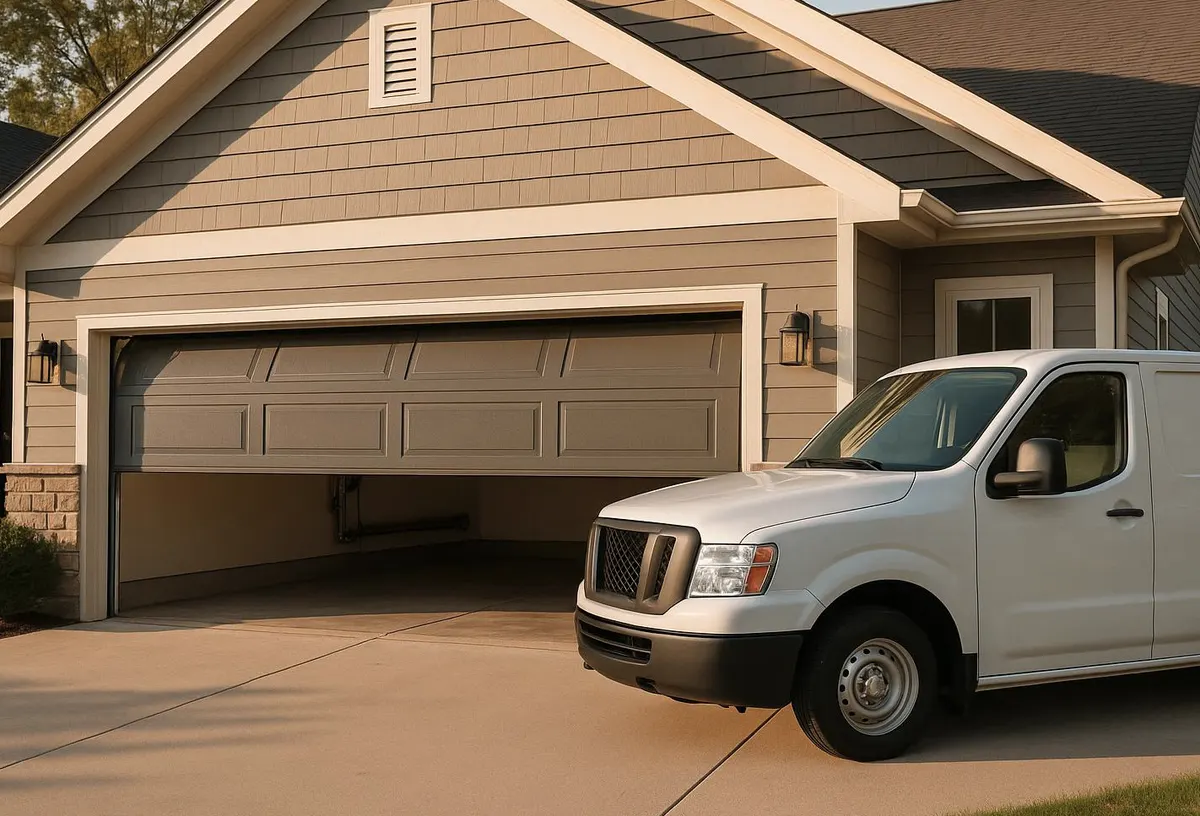
The Mistake Most Homeowners Make First
When a garage door starts letting in a cold draft, a line of daylight, or the occasional field mouse, most people reach for a tube of caulk or shove a rolled-up towel under the door. It's tempting because it's fast, cheap, and seems to work for a week or two. The problem is that caulk and towels don't fix anything — they just mask a seal that's already cracked, flattened, or pulled away from the door. Once winter sets in and that worn rubber hardens in the cold, the gap comes right back, usually bigger, and now you're dealing with meltwater and road salt tracking under the door instead of just a draft.
The actual fix is replacing the bottom seal and weatherstripping, and it's one of the few garage door repairs most homeowners can genuinely do themselves with basic tools and an hour of time.
Tools You'll Need
- Tape measure
- Utility knife
- Flathead screwdriver or small pry bar
- Replacement bottom seal (bulb-style or T-style, matched to your retainer track)
- Adhesive-backed or nail-in weatherstripping for the side and top jambs
- Wire brush or stiff broom
- Work gloves
- Garden hose (for testing, optional)
Step-by-Step: Replacing the Bottom Seal
- Inspect the current seal. Close the door fully and look along the bottom from inside the garage. Cracking, flattening, stiffness, or visible daylight all mean it's time to replace it, not patch it.
- Measure your door's width to buy the correct length, and check whether your door uses a T-style or bulb-style retainer track so you buy a matching seal.
- Clear the track and threshold. Use a wire brush or broom to remove dirt, old caulk, and dried-out rubber fragments. This matters more here than in milder climates, since sand and salt residue from winter driveways grinds into the seal and wears it out faster.
- Remove the old seal by pulling it out of the retainer track, or prying up a nailed-on strip with a flathead screwdriver.
- Feed the new seal into the track, working it through slowly, and trim the excess with a utility knife so it's flush with both ends of the door.
- Check the side and top weatherstripping on the jambs. If it's brittle or peeling, remove it and press or nail in a new strip, following the same process.
- Test the seal. Close the door and check for visible light gaps from inside. If you want a more thorough check, run a hose along the bottom and sides from outside and watch for seepage.
What a Homeowner Can Handle vs. What Needs a Technician
Replacing the bottom seal, side weatherstripping, and top seal is standard homeowner-level work. It doesn't involve springs, cables, or the opener, and the parts are inexpensive.
Call a technician instead if you notice any of the following during your inspection:
- The door doesn't sit flush with the floor even with a new seal installed — this often means the track is out of alignment or the floor has settled unevenly.
- The gap is uneven from one side to the other, which usually points to a door that's out of square or a bent track.
- You see frayed cables, a stretched or kinked spring, or rollers that look worn or cracked. These are under tension and aren't a DIY fix.
- The seal keeps failing in the same spot every few months, which can mean the panel itself is warped or damaged.
When to Call Gilberts Garage Door
If your bottom seal keeps failing, the door won't sit flat no matter what you install, or you notice worn cables or tracks while you're down there inspecting things, that's our cue. Our Garage Door Maintenance service checks the full door — hinges, rollers, tracks, and hardware — not just the seal, so you're not back here again in three months. If the issue turns out to be a bent track or frayed cable, our Cable & Track Repair service handles that safely, since those components are under real tension and not something to troubleshoot on your own.
Before the first hard freeze and salted driveways show up, it's worth a quick inspection. If you're anywhere in Gilberts, Elgin, Carpentersville, or the surrounding Kane County area and want a second set of eyes on your door before winter, give Gilberts Garage Door a call — we'll get it sealed up right.